Cooldown from the room
Cooldown from room temperature to base can run automatically. The control software keeps diagnostics, a full data log, and separate screens for magnets, fast sample exchange, and maintenance.
 H-GATE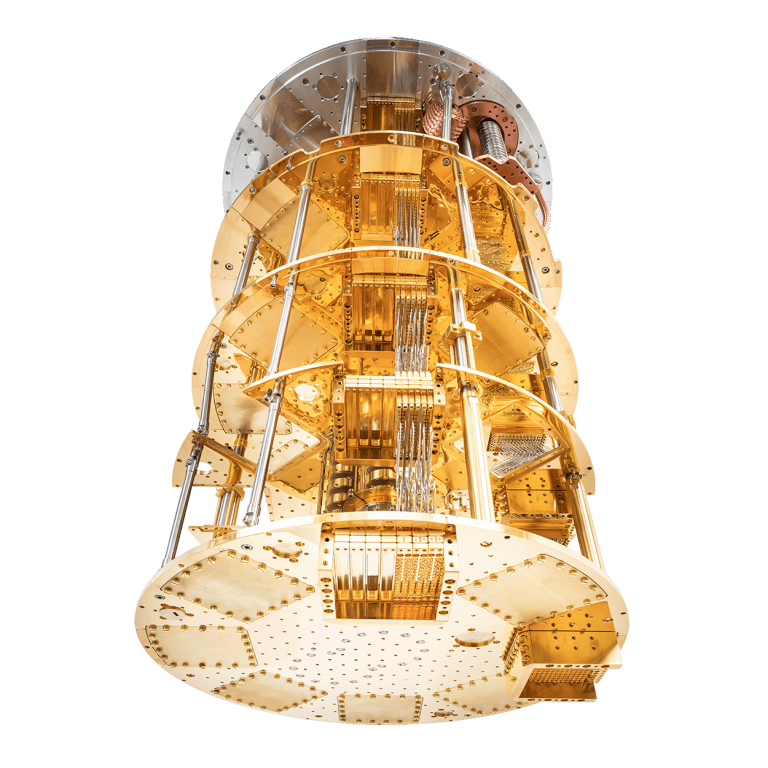
Home / Products / Dilution refrigerator
Measurement systems
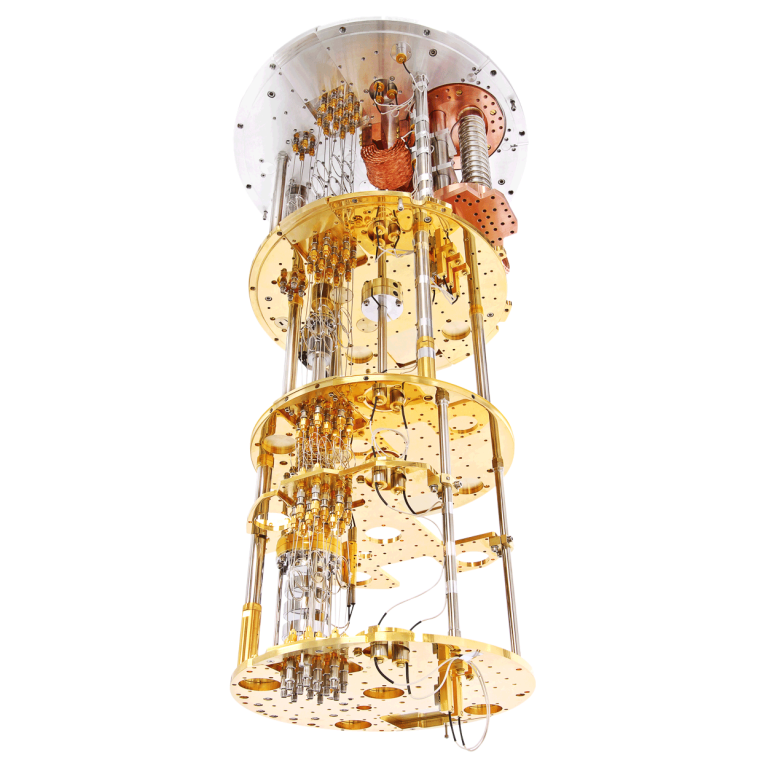
Cryogen-free refrigerators that cool continuously by diluting a helium-3 / helium-4 mixture in a closed loop. The next gas-handling generation adds automated cooldown and a single control application for diagnostics, logs, and the attached magnet or sample exchange.
01
Cooldown from room temperature to base can run automatically. The control software keeps diagnostics, a full data log, and separate screens for magnets, fast sample exchange, and maintenance.
The larger frames are guaranteed below 10 mK. The compact SD frame is guaranteed below 30 mK. Cooling power is quoted at the experimental flange, outside the mixing chamber.
A revised pulse-tube mount raises cooling power on the 4 K flange. That flange can sit warmer without pulling the dilution unit off its operating point, which frees still more cooling power.
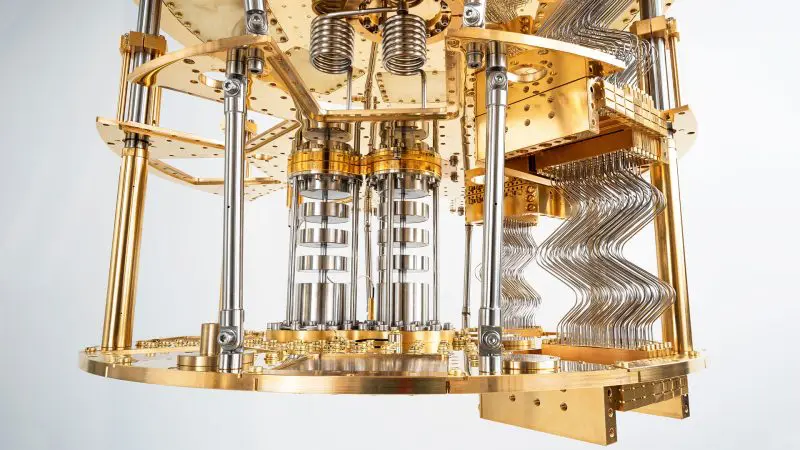
A frame can take the coaxial and DC wiring from the measurement catalog, plus a cryogen-free superconducting magnet when the experiment needs a field.
The controller is built into every dilution system and shows the temperature state directly.
Oil-free pumps and compressors in the gas handling system are specified for a service interval of up to 3 years.
02
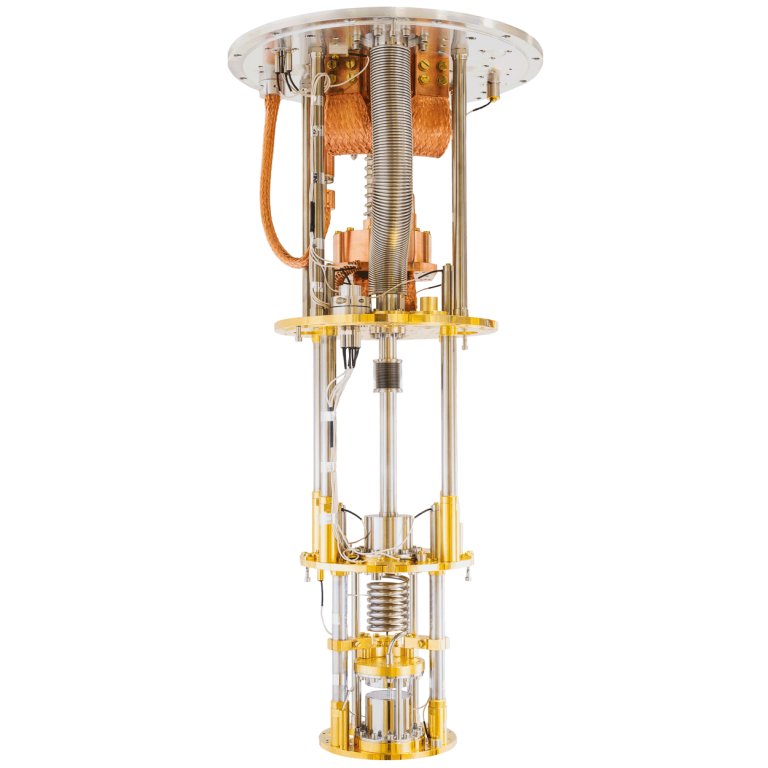
The compact frame, with a fast path from order to a running system. Base temperature is guaranteed below 30 mK.
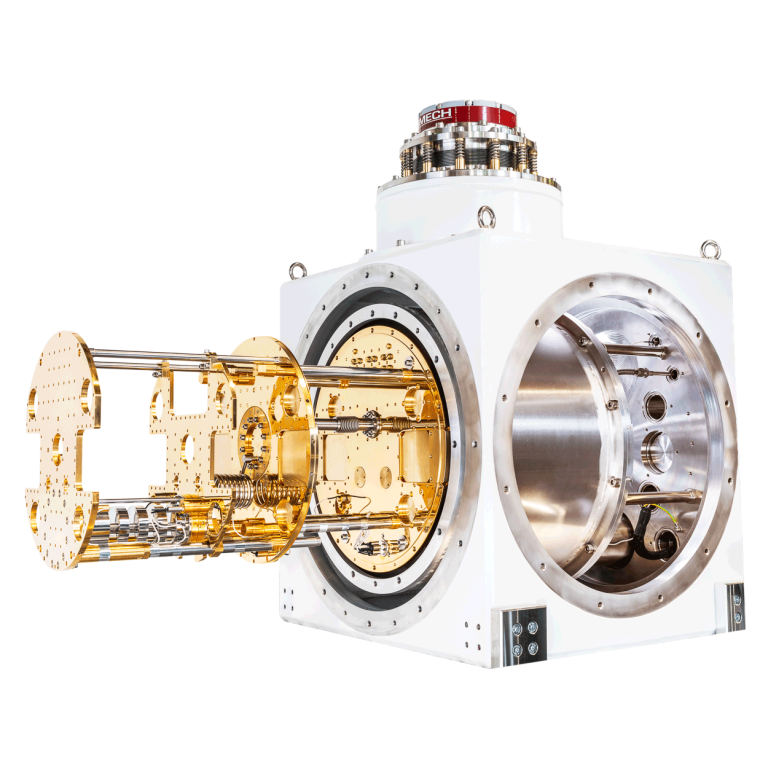
The general-purpose frame. LD350 and LD450 differ mainly in cooling power. Side-loading versions add large experimental ports.
The large side-loading frame. A 500 mm mixing-chamber flange and a centered dilution unit, with the XLD1000sl using a dual unit.
An all-in-one package built on the LD. The superconducting and spin qubit builds are on the preconfigured systems page, with a shorter path from order to installation.
A low, horizontal refrigerator. It can run at a tilt, with the dilution unit laid on its side.
03
Cooling power is measured on the experimental flange, outside the mixing chamber.
| SD | LH | LD350 | LD450 | LD450sl | XLD450sl | XLD1000sl | |
|---|---|---|---|---|---|---|---|
| Cooling | |||||||
| Standard pulse tube configuration | 1 × PT410 | 1 × PT415 | 1 × PT415-ENH | 1 × PT415-ENH | 1 × PT415-ENH | 2 × PT415-ENH | 2 × PT415-ENH |
| Other available pulse tube models | PT415, PT420, PT425, PT310 | PT420, PT425 | PT425-ENH, PT310-ENH | PT425-ENH, PT310-ENH | PT425-ENH, PT310-ENH | 2 × PT425-ENH, PT310-ENH and PT425-ENH | 2 × PT425-ENH, PT310-ENH and PT425-ENH, 3 × PT425-ENH |
| Guaranteed cooling power (µW) at 20 mK | N/A | >10 | >12 | >14 | >14 | >14 | >30 |
| Guaranteed cooling power (µW) at 100 mK | >250 | >250 | >350 | >450 | >450 | >450 | >1000 |
| Guaranteed base temperature (mK) | <30 | <10 | <10 | <10 | <10 | <10 | <10 |
| Mechanical features | |||||||
| MXC flange diameter (mm) | 148 | 294 | 294 | 294 | 294 | 500 | 500 |
| Dilution unit placement | edge | edge | edge | edge | edge | center | center |
| Dilution unit type | short | horizontal | standard | standard | standard | standard | dual |
| Standard experimental portsThe number of ports depends on the options and the wiring fitted. | |||||||
| KF25 | 1 | ||||||
| KF40 | 2 | 4 | 5 | 5 | 4 | 7 | 7 |
| K63 | 2 | 2 | 2 | ||||
| Side-loading ports | 2 | 6 | 6 | ||||
| Maximum number of coaxial cables | 14 (SMA) | 70 (SMA) | 77 (SMA) | 77 (SMA) | 336 HDW and 28 SMA, or 92 SMA | >1000 (HDW) | >1000 (HDW) |
04
The current gas handler runs the closed helium loop with oil-free pumps and compressors. Service is specified at up to three years. Safety interlocks and the circulation hardware sit in the same rack as the control software.
One application covers cooldown from room temperature to base, system logs, magnet control, fast sample exchange, and maintenance. Diagnostics stay on the same screen as the live temperatures.
05
A PT310 on an LD450 raises mixing-chamber cooling power by about 15–20%. PT310 and PT425 on an XLD1000sl raise it by about 10–15%. Wiring from the coaxial catalog uses the ports in the comparison.
06
Cooldown depends on the added mass, how well it is heat-sunk, and the copper in the experiment. Example curves exist for particular builds. A single loaded time would not cover every wiring and magnet combination.
Yes. SD, LD, XLD450sl, and XLD1000sl include the gas-handling system and the helium-4 charge: 60 L, 90 L, or 180 L depending on the frame.
SD uses 12 L of helium-3 with 60 L of helium-4. LD350, LD450, XLD450, and LH use 18 L / 90 L, or 20 L / 90 L when more cooling power is required. XLD1000 uses 40 L / 180 L.
No. 40 L / 180 L is the working ratio. Extra helium-3 does not add cooling power. PT310 and PT425 pulse tubes raise mixing-chamber cooling power by about 10–15%.
A 20 L / 90 L mix has shown higher power than the guaranteed 18 L / 90 L figure. The exact gain is not guaranteed. A PT310 on an LD450 raises mixing-chamber cooling power by about 15–20%.
Yes, if the concentration is known. The minimum helium-3 is 18 L on an LD (about 17%) and 40 L on an XLD1000 (about 18%). Connect the container to the KF16 or KF25 port. There is no built-in isotope analyzer. Clean the gas through a liquid-nitrogen trap, and a liquid-helium trap if you can. Oil-pumped mixtures can clog the loop.
No. The system can ship with helium-4 only, and your own helium-3 can be transferred during installation. Use N3 (99.9%) gas on a bottle with a CGA 580 valve. Minimum charges are 12 L (SD), 18 L (LD350, LD450, XLD450, LH), and 40 L (XLD1000).
Sales